- Home
- Programme
- Registration
- Practical Guide
- About Neuronus
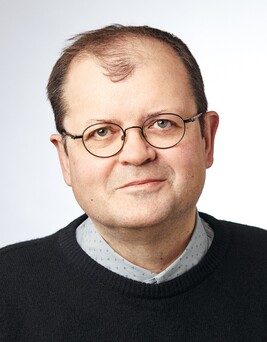
Heidelberg University, DE
Valery Grinevich obtained his MD degree in 1992 from Kursk State Medical University (USSR/Russia), specializing in neurology and psychiatry. In 1996, he defended his PhD thesis on the evolutionary and comparative neuroanatomy of the oxytocin and vasopressin systems in vertebrates at the Russian Academy of Sciences in Saint Petersburg under the supervision of Prof. Andrey L. Polenov.
As a recipient of the Russian Presidential Award, he completed postdoctoral training with Profs. Fernand Labrie and George Pelletier in Quebec, studying hypothalamic mechanisms of the stress response, and later joined Greti Aguilera’s team at the NIH to investigate neuro-immuno-endocrine interactions. In 2001, as an Alexander von Humboldt Fellow, Dr. Grinevich joined Prof. Gustav Jirikowski’s group in Jena to study pathological alterations in human hypothalamic neurons. Although appointed Full Professor at Moscow State Medical University in 2003, he declined the position to pursue postdoctoral research with Prof. Peter H. Seeburg at the Max Planck Institute for Medical Research in Heidelberg, where he learned methods of molecular neurobiology and developed cell-type-specific viral tagging of oxytocin neurons.
He established his own research group there in 2008. In 2012, he became Head of the Independent Neuropeptides Group at the German Cancer Research Center (DKFZ) and the University of Heidelberg. Since May 1, 2019, he has been Full Professor (W3) at the University of Heidelberg and Director of the Department of Neuropeptide Research in Psychiatry at the Central Institute of Mental Health in Mannheim. He also holds affiliate appointments at Georgia State University (USA) and, since 2025, heads the International Joint Laboratory for Translational Research on Neuromodulation at the Chinese Academy of Sciences.
Valery Grinevich has published numerous seminal papers and received major awards and grants, including the ERC Synergy Grant and the German-Israeli Project Cooperation (DIP) grant, both of which he currently coordinates.